
9 hr
Riga to Vilnius Transfer with Castle & Pilgrimage Stops
One-way journey from Riga to Vilnius featuring medieval fortresses, baroque architecture, and Lithuania's sacred Hill of Crosses.
Reserve
Hand-picked by our editors — only the best 5 transfer experiences from 18 reviewed.
Verified partners for every tour, free cancellation where available, and instant confirmation on every booking.
9 hr
One-way journey from Riga to Vilnius featuring medieval fortresses, baroque architecture, and Lithuania's sacred Hill of Crosses.
Reserve
7 hr
Travel between capitals in comfort with guided visits to Rundāle Palace and Bauska Castle along the way.
Reserve
10 hr
Travel between capitals while discovering baroque splendor, medieval fortresses, and a legendary pilgrimage site
ReservePrices from verified partners. Availability updates in real time at checkout. Free cancellation policies apply where shown.
The landmarks, rooms, and views travelers on this tour remember — all visible on a single visit.
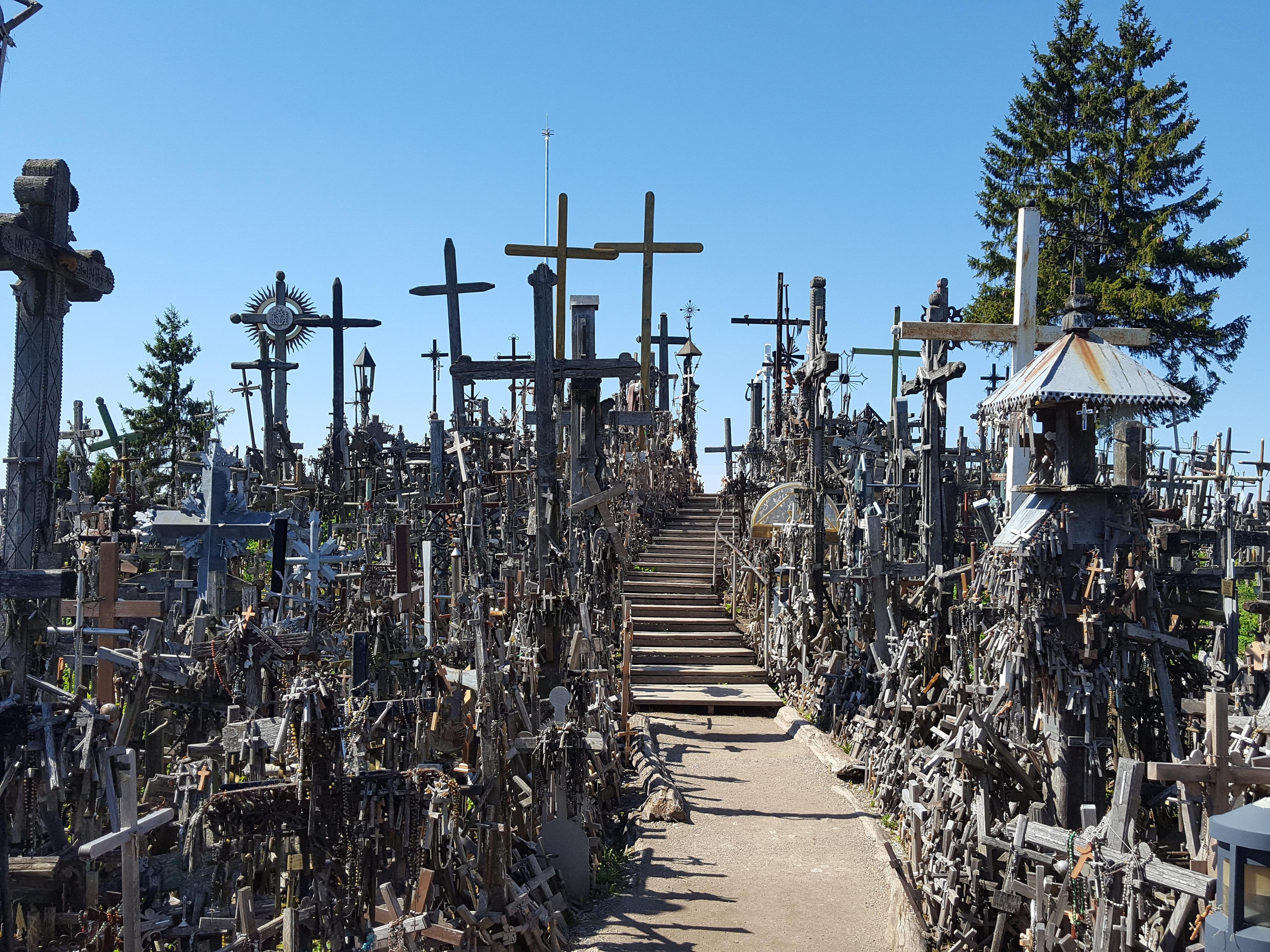
The core elevation containing thousands of historical crucifixes
St. Mary Statue
Lower Paths
Memorial Crosses
Northern Lookout
Trakai Castle offers a focused architectural excursion, whereas the Hill of Crosses provides a profound, somber outdoor experience for those planning a vilnius to riga day trip. Both landmarks serve as vital cultural stops, though travelers seeking medieval fortification should prioritize the castle while pilgrims prefer the open-air site.
| Feature | Top pick Hill of Crosses | Trakai Castle |
|---|---|---|
Experience Type |
Spiritual pilgrimage site | Fortified island castle |
Setting |
Open-air rural landscape | Lakeside peninsula |
Historical Focus |
Devotional and folk tradition | Grand Duchy military architecture |
Time Required |
1–2 hours | 2–4 hours |
Accessibility |
Unpaved paths | Footbridge access |
Vibe |
Somber and introspective | Regal and scenic |
| See tickets → |
Verdict: Most travelers find that while you can secure vilnius to riga day trip tours to both, Trakai provides a more structured historical narrative, whereas the Hill of Crosses is better suited for a brief, evocative stop during a vilnius to riga day trip tour before moving on to retrieve your vilnius to riga day trip tickets for the final transit.
Choose your ticket, select your date, and reserve in under two minutes. Secure checkout handled by our verified partner.
Instant confirmation by email, with a mobile voucher you can save offline. No printing, no queuing at a collection desk.
Arrive at the entrance, show your voucher on your phone, and walk in. Most tickets include priority or skip-the-line access.
Practical details for your visit straight from our verified partners — hours, access, rules, and how to get there.
Jurgaičiai 81439
Primary site entrance point
Follow the A12 road to Jurgaičiai for direct access.
Take a bus to Šiauliai and a taxi to the site.
Modest clothing is appropriate when visiting the Hill of Crosses during your vilnius to riga day trip. Sturdy walking shoes are recommended due to uneven gravel terrain.
Standard backpacks are permitted for your transit between cities. Keep personal belongings secure as there is no central storage for a vilnius to riga day trip.
Photography is permitted throughout the site. Many visitors capture the dense clusters of crucifixes during their vilnius to riga day trip tour.
The main paths are accessible, though steep sections exist. Guests requiring assistance should plan for extra time during their vilnius to riga day trip tickets usage.
Mobile phone use is permitted everywhere. Ensure devices are charged for navigation during your vilnius to riga day trip.
The open-air site provides space for children to walk safely. Prepare for a vilnius to riga day trip with water and snacks since services are limited.
There are no restaurants located directly at the Hill of Crosses. Bring refreshments for your vilnius to riga day trip travel leg.
Pets are allowed if kept on a leash at all times. Please clean up after animals during your vilnius to riga day trip.
The site remains open regardless of weather. Always check the Hill of Crosses status before departing for your vilnius to riga day trip.
Best time to go, insider tips, nearby landmarks, and the cancellation fine print — flip through to skim what matters to you.
How crowds, weather, and events shift across the year.
June to August offers pleasant temperatures and long daylight hours for your vilnius to riga day trip.
September brings cooler air and fewer visitors to the site.
April and May feature blooming greenery surrounding the hill.
Snow provides a quiet, stark contrast to the thousands of crosses.
Small details that turn a good visit into a great one.
Reach the site early to avoid midday crowds during your vilnius to riga day trip.
Wear shoes suitable for uneven gravel paths.
Maintain a quiet demeanor as this is a sacred site for many.
Ensure you have change for the small parking fee required at the site.
Dress in layers as Baltic weather can change quickly.
Download offline maps before starting your vilnius to riga day trip.
Local vendors sell crosses near the entrance for those wishing to contribute.
Non-bookable sights within a short walk — free to visit, easy to pair.
A historic manor showcasing industrial heritage.
Notable for its distinctive Renaissance architecture.
Exhibits history of the Baltic railway systems.
Famous city square featuring a large sundial.
Flexible, no hidden fees.
Full refunds are available for standard vilnius to riga day trip bookings if cancelled within the operator window. Note that the 0 EUR entrance fee does not include parking costs.
Hand-picked options within walking distance — pick a district for vibe, or a specific hotel for convenience.
Variety of options available in the town center.
Small family-run stays near the district.
Economical lodging for solo travelers.
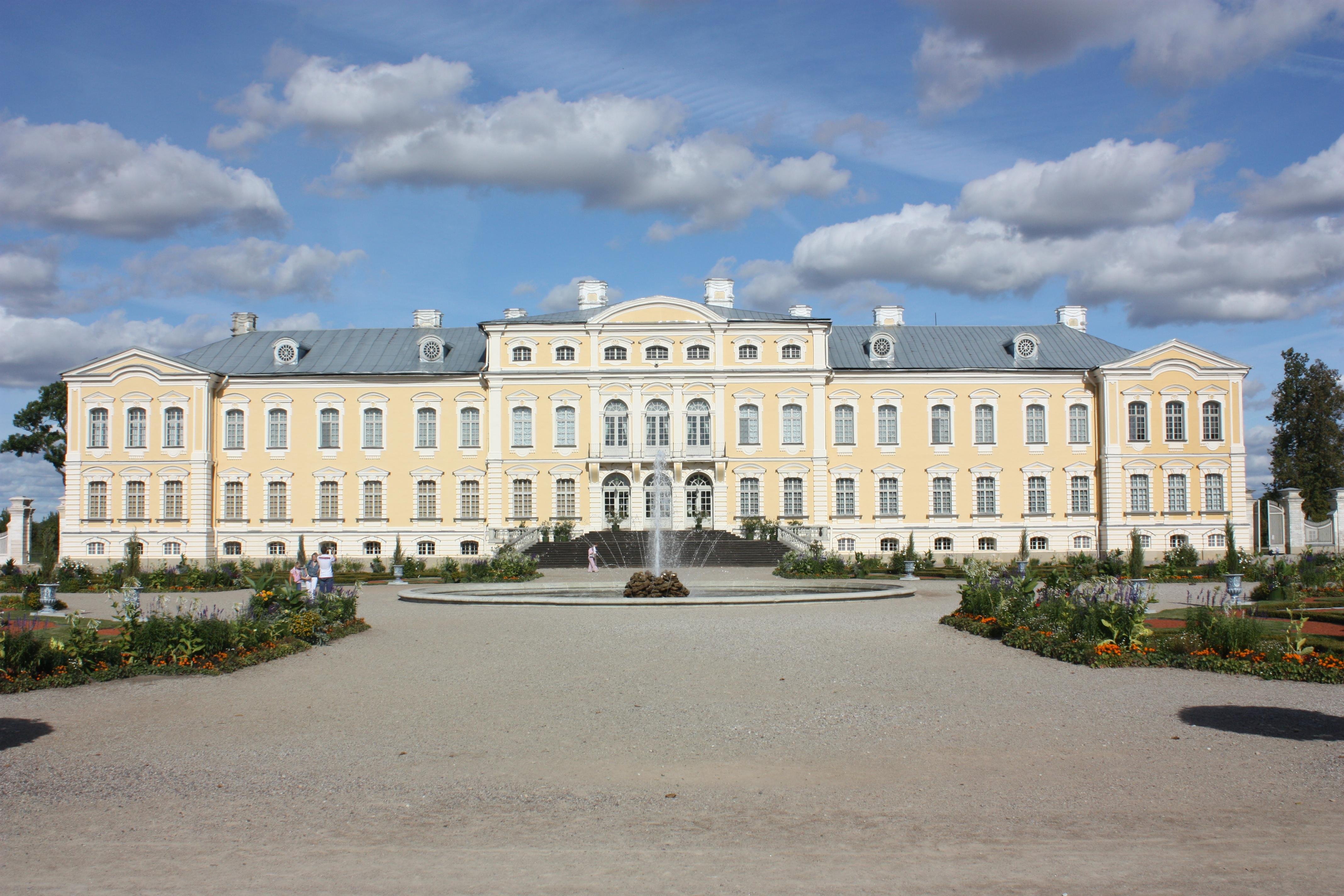
The 294-kilometre corridor linking Vilnius and Riga was once a postal artery of the Grand Duchy, threading manor estates and ecclesiastical waypoints across the Lithuanian-Latvian plain. Today the route remains a showcase of northern Baroque and pilgrimage architecture, with Rundale Palace—Baltic Europe's most intact rococo residence—and the Hill of Crosses, a devotional site where 200,000 wooden and metal crosses carpet a hillock west of Šiauliai, standing as the two anchoring stops most travellers prioritise between capitals. Rundale was commissioned in 1736 by Ernst Johann von Biron, regent of Courland, and designed by Francesco Bartolomeo Rastrelli, whose later portfolio included the Winter Palace in Saint Petersburg. The main block holds 138 rooms, among them the Gold Hall with its trompe-l'œil ceiling fresco by Francesco Martini and a suite of state apartments whose plasterwork and parquetry survived Soviet-era institutional use. The formal garden extends across eighteen hectares in the French manner, quartered by lime allées and centred on a parterre de broderie restored from Rastrelli's original plan. Unlike many Baltic estates dismantled after 1918, Rundale retained both its envelope and its interior programme, making it the region's benchmark for courtly taste in the mid-eighteenth century. The Hill of Crosses accrued its present density over five centuries, though the site's origin is debated—chronicles from the fourteenth century mention a wooden fortification on the same rise, possibly linked to the 1348 uprising against the Teutonic Order. Crosses were planted here as votive offerings following the 1831 and 1863 Polish-Lithuanian uprisings, and again during the Soviet occupation, when authorities bulldozed the hill three times between 1961 and 1973; pilgrims replanted it within weeks each time. By independence in 1991 the count had reached 40,000; today the figure exceeds 200,000, with rosaries, photographs, and inscribed plaques woven through the forest of wooden stakes and wrought-iron crucifixes. Most vilnius to riga day trip itineraries schedule two to three hours at Rundale and one hour at the Hill of Crosses, with total travel time including stops sitting near five to six hours. Jelgava Palace, Rastrelli's largest work by floor area, occasionally appears as a third waypoint; its exterior survives intact, though the interior now houses a university and touring access is limited to the crypt and ceremonial staircase. The routing flexibility—northbound or southbound, private or shared transfer—means the journey functions equally as a one-way repositioning with sightseeing value or a return loop from either capital.
"Pilgrims replanted the hill within weeks each time Soviet bulldozers cleared it, turning erasure into accumulation."
A step-by-step walkthrough of the visit — what you'll see, how long each stage takes, and the details that matter.
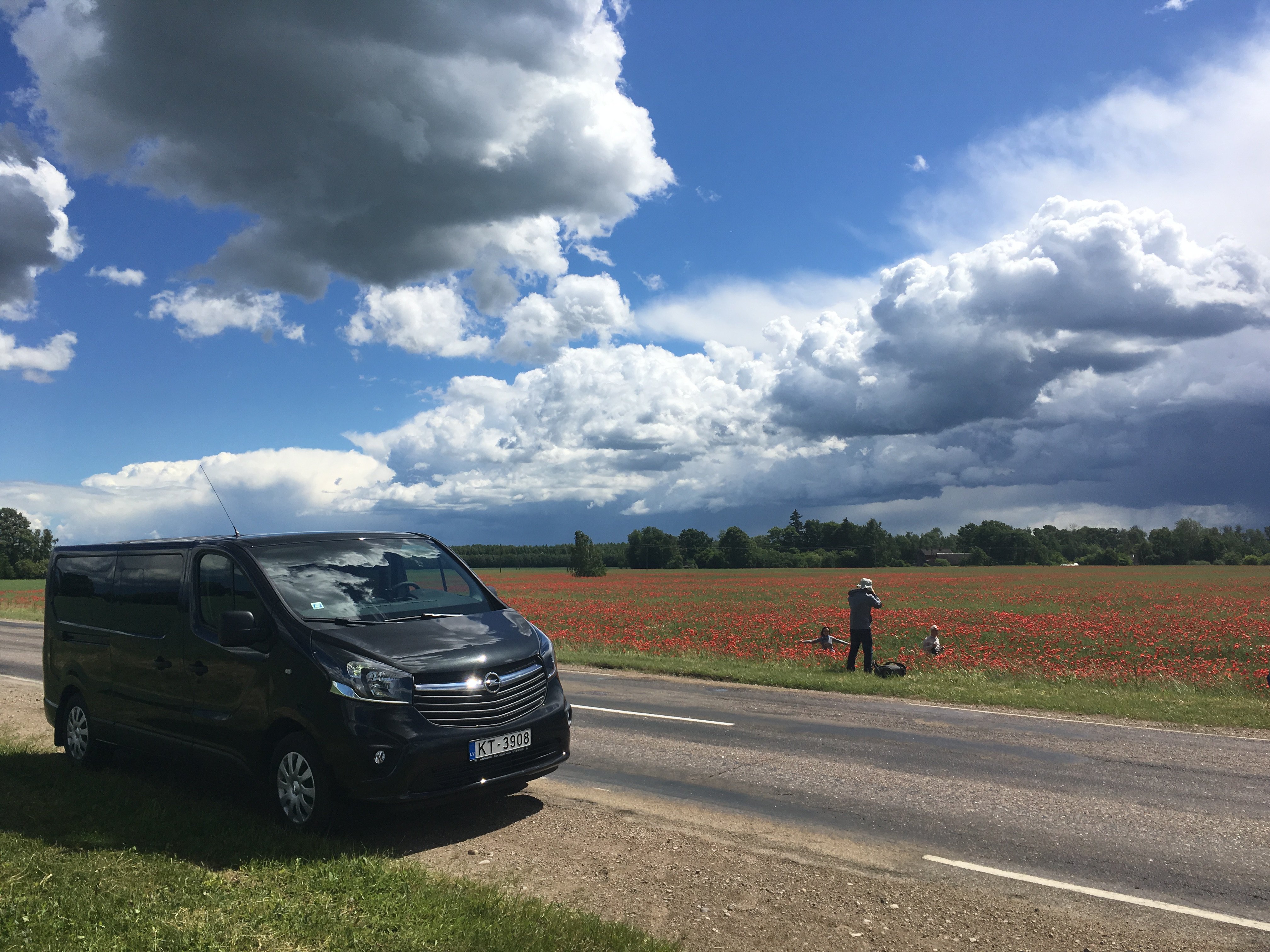
You leave Vilnius in the early morning, the A10 highway straightening north through pine and birch corridors broken by roadside shrines and farmsteads with red-tile roofs. Ninety minutes later the Hill of Crosses rises abruptly on the left, a low mound bristling with vertical silhouettes—wooden stakes, wrought-iron lattice crosses, and aluminium crucifixes stacked so densely that soil is no longer visible between them. You walk the gravel loop, rosaries clicking underfoot, inscriptions in Lithuanian, Polish, and Cyrillic carved into beams weathered silver-grey. Another hour north the road peels east toward Rundale, and the palace façade appears across flat parkland—ochre stucco, white pilasters, a mansard roof punctuated by dormer pediments. Inside, the Gold Hall ceiling lifts three storeys, Martini's fresco depicting allegories of the seasons in pastel blues and pinks. You move through the White Hall, the Porcelain Cabinet with its tiers of Meissen figurines, and the duchess's bedchamber where floral marquetry panels frame the alcove. Outside, the French garden stretches in geometric quarters, gravel paths dividing boxwood scrolls and rose rounds. You continue north, crossing the Lielupe River into Latvia. Jelgava Palace—a longer, plainer envelope than Rundale—sits beside the highway; if time allows, a fifteen-minute stop reveals the crypt where Courland dukes rest in tin sarcophagi. By late afternoon the silhouette of Riga's spires appears on the horizon, the Daugava widening as the van merges into the capital's southern approach.
The site is open 00:00–23:59 daily.
There is 0 EUR entrance fee; small fee applies for parking.
Yes, many choose to stop at the Hill of Crosses during their vilnius to riga day trip.
Yes, a small fee applies for parking near the site.
No, photography is allowed throughout the Hill of Crosses.
The best arrival window is 00:00–23:59 to avoid midday crowds.
Accessibility is limited due to gravel paths, but the main areas are reachable.
Yes, you may bring food, but please dispose of waste properly.
Yes, various operators offer guided vilnius to riga day trip tickets and services.